
Gran's Best Easy Cheese Scones Recipe 30 mins 8

This post may contain affiliate links. Where I make a small commission on purchased items, at no extra cost to you. See my disclosure for details.
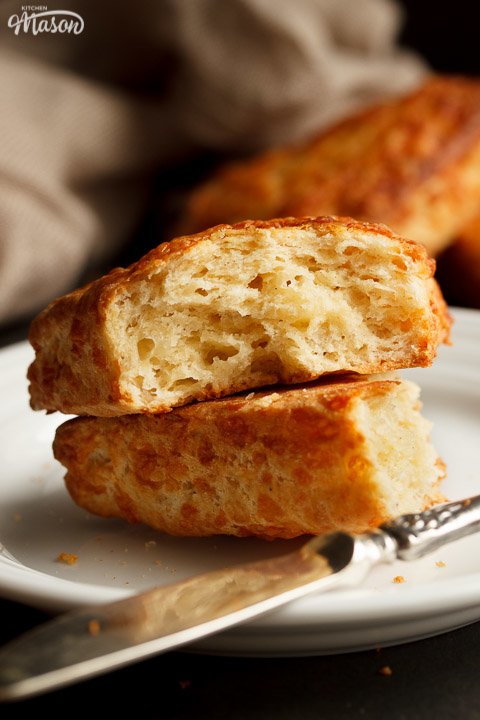
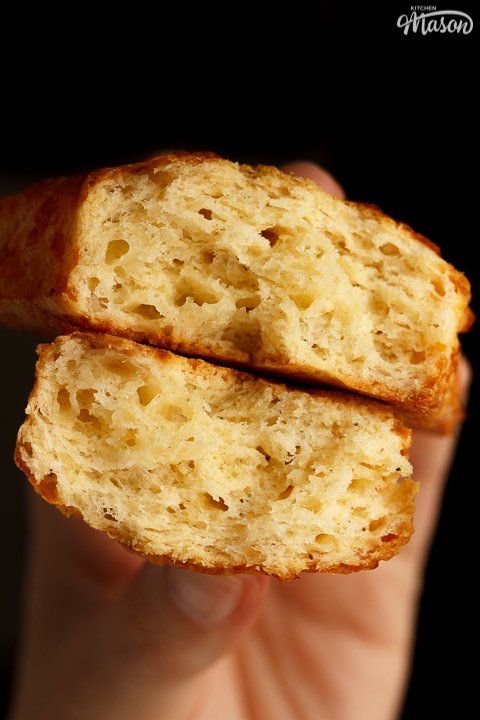
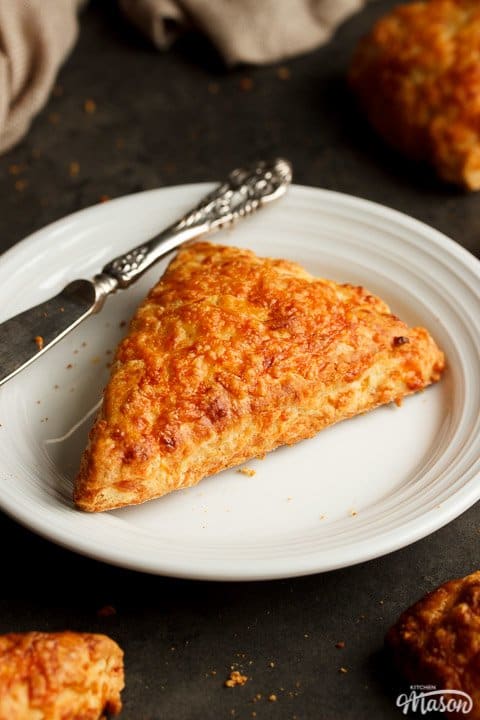
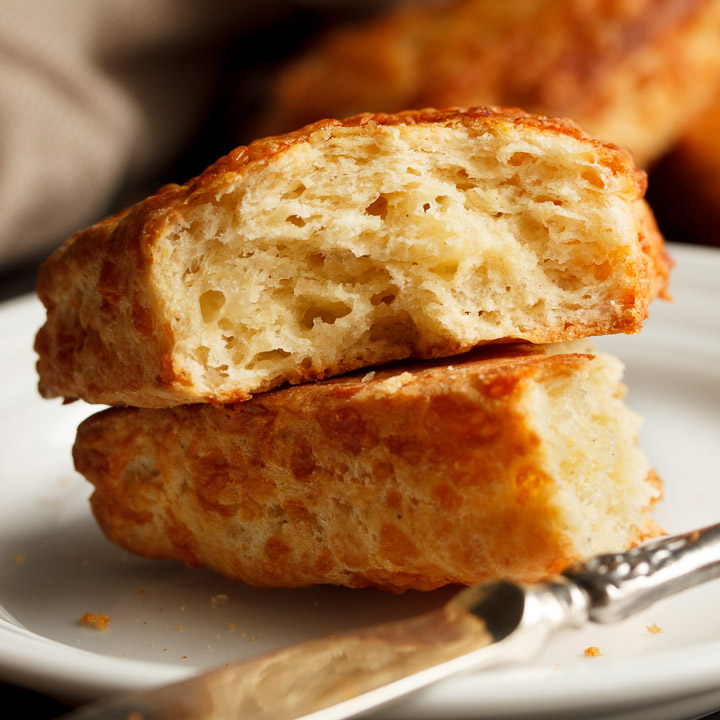
My Gran's cheese scones are incredibly light and flaky, with an exquisite cheese flavour! And they're absolutely gorgeous fresh from the oven with a generous helping of butter. The recipe is very simple, and easy to follow. And there are lots of helpful tips along the way. I promise - you won't be disappointed!
Jump to:
Why you'll love it 💛
If you've been around here a while, you'll know how much I love my Gran's cooking. The love for her pickled beetroot has spread far and wide, and my family still fight over the last slice of her ham and cheese quiche!
These cheese scones are another of her trademark bakes. She made them frequently throughout the Covid-19 pandemic, and it brought comfort to many of us throughout a difficult time. Her recipe is so easy, and they always turn out perfectly!
If you want to become a more experienced baker like my Gran, start with the basics just like she did! Read through baking for beginners and see where it leads you.
Ingredient notes
Confused about what ingredients to buy? Not sure about a substitution? Here's everything you might need to know...
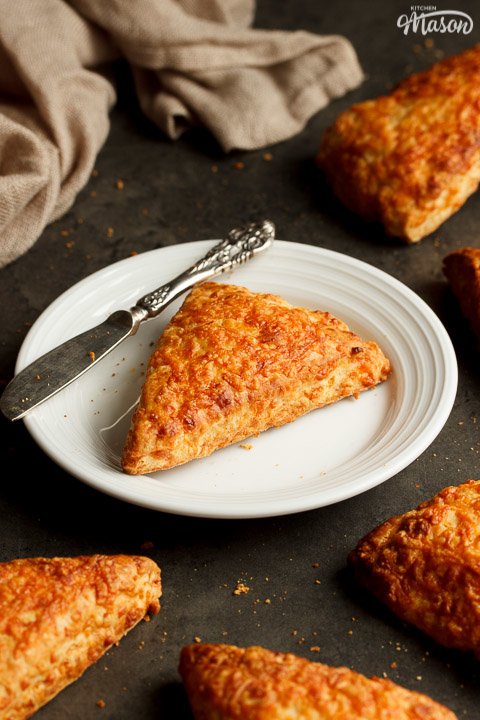
- Flour - I use plain/all purpose flour and baking powder. You could leave both of those out and use self raising flour instead, if that's what you have.
- Baking Powder - Used to leaven the scones and make them light and airy. Don't switch this for bicarbonate of soda! They react differently as they're on opposite ends of the PH scale.
- Salt & Pepper - Anything you have in the cupboards will work fine here, just don't leave them out as it really helps with the overall flavour and crumb structure.
- Mustard Powder - Cheese and mustard are a classic combo! This really adds to the overall depth of flavour. Don't switch for the liquid variety as it could make your dough too sticky.
- Butter - You can use margarine if you don't have butter. I like to use unsalted butter for the best flavour, but Gran loved Stork.
- Cheese - Only extra mature cheddar will do here. Flavours tend to mellow when baked, and a mild cheese just won't cut it.
- Egg - I use large free range. So long as yours isn't EXTRA small or large, whatever you have should work fine. You may need more or less milk depending on the size of your egg though.
- Milk - Any milk (other than a sweet variety, like vanilla) will be fine here. E.g. cows milk, oat milk, soy milk etc.
Emma's top tips
Here are tips you'll find helpful when making this recipe.
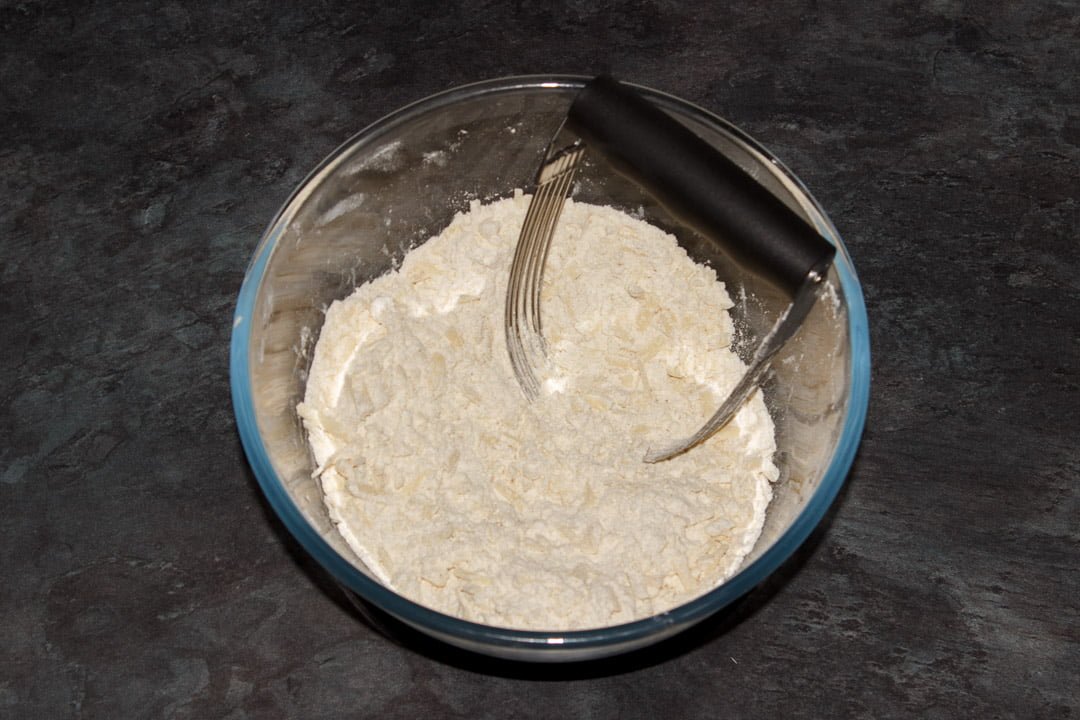
- Invest in a pastry blender. They're cheap, work faster, and are less messy when rubbing ingredients together. Gran has one, and so do I!
- Use cold butter. Warm butter gets very messy very quickly.
- Using your hands to mix the dough? Run them under cold water first. Warm hands heat up the butter and it can melt quite quickly.
- Don't overwork the dough! The less you touch it the better.
- Use strong cheddar cheese for the best flavour. You won't taste a mild cheese.
- Try and cut all your scones to the same size, they will bake more evenly.
- Scones gone a bit stale? Warm them up in the oven and enjoy with some butter to bring them back to life.

Timings
Have limited time? Struggle with recipe timings? Or juggling around other things? Here's some time managing info to make your life easier!
- Preparing your ingredients should take no more than 3-4 minutes. (Grating the cheese and cubing the cold butter.)
- Making the dough will take around 10 minutes.
- Kneading, shaping, and topping is about a 5 minute task.
- Baking your cheese scones will take 10-15 mins.
- You can eat them as soon as they are cool enough to handle.

Step by step picture recipe
(For a printer friendly version, see the recipe card at the end of this post)
Please note, this recipe includes both UK metric and US Cup measurements.
Ingredients
Here is what you will need to make 8 scones.
- 170g (1 + ⅓ Cup) Plain Flour
- 3 teaspoon Baking Powder
- Salt and Pepper, to taste
- ½ teaspoon Mustard Powder
- 30g (⅛ Cup) Unsalted Butter, cold & cubed
- 125g (1 + ⅛ Cup) Grated Strong Cheddar Cheese, divided
- 1 x Medium Egg
- 2-4 tablespoon Milk
Essential equipment
- Large Mixing Bowl
- Fork
- Baking Tray
- Pastry Brush
Instructions
First, preheat your oven to 220°C/Fan 210°C/428°F.
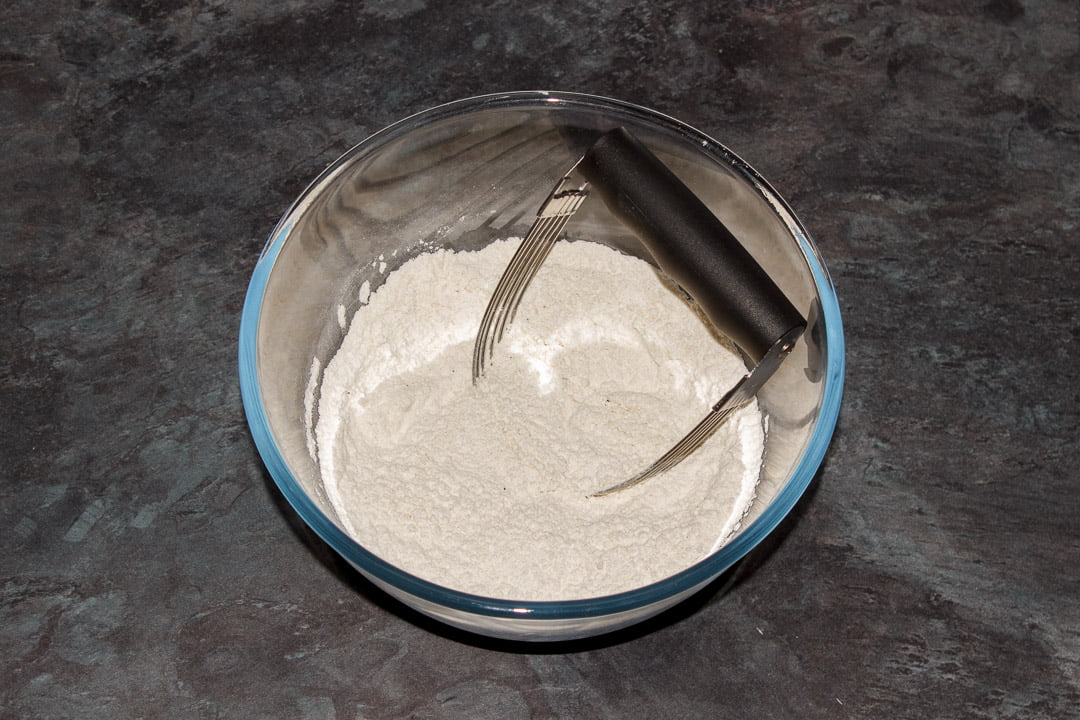
Then get started by mixing the flour (170g | 1 + ⅓ Cup), baking powder (3 tsp), salt and pepper, and mustard powder (½ tsp) together in a large mixing bowl.
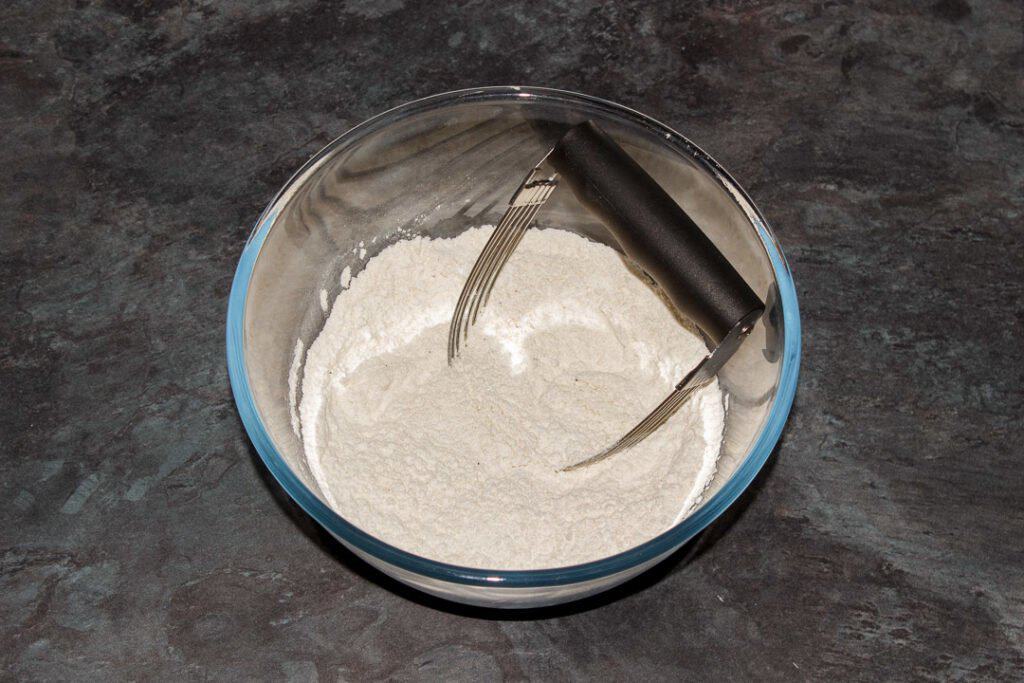
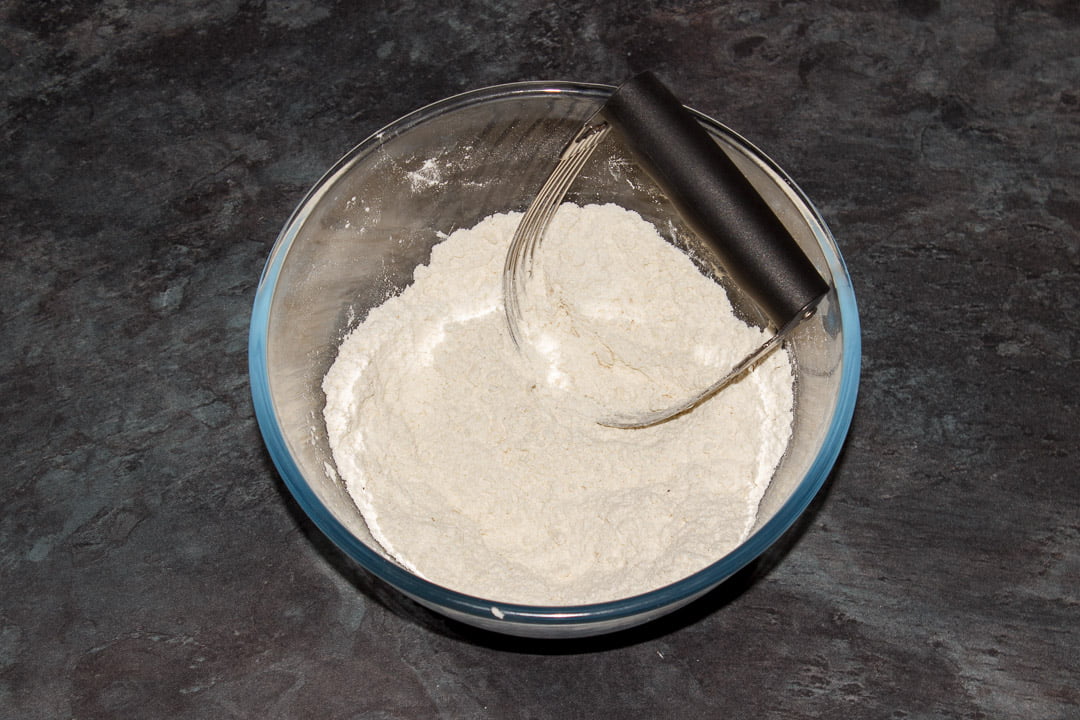
Next, rub the butter (30g | ⅛ Cup) into the flour mixture until it becomes like very fine crumbs. You can either use cold hands or a pastry blender.
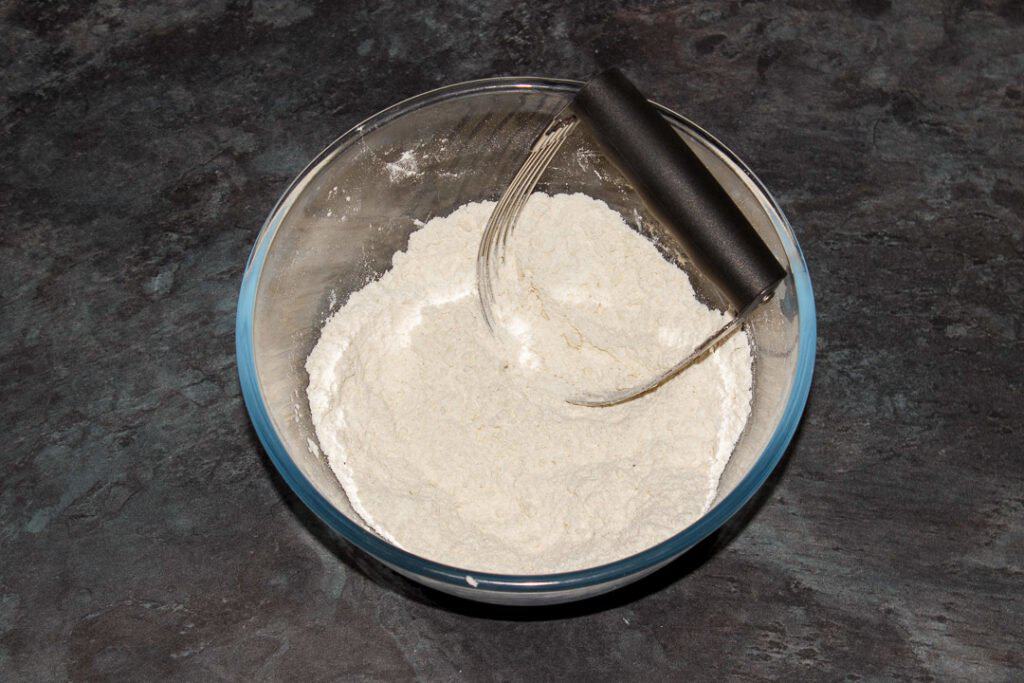
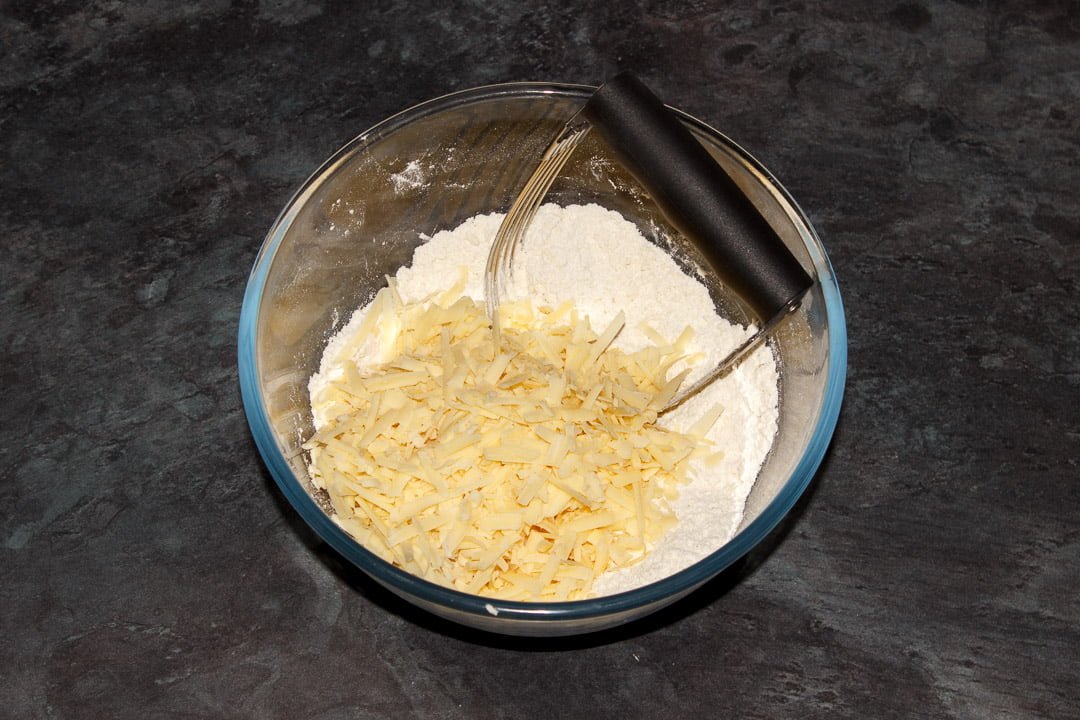
Now it's time to add in the flavour! Briefly mix through 100g | ⅞ Cup of the grated cheese, and reserve the rest (25g | 2/8 Cup) for later.
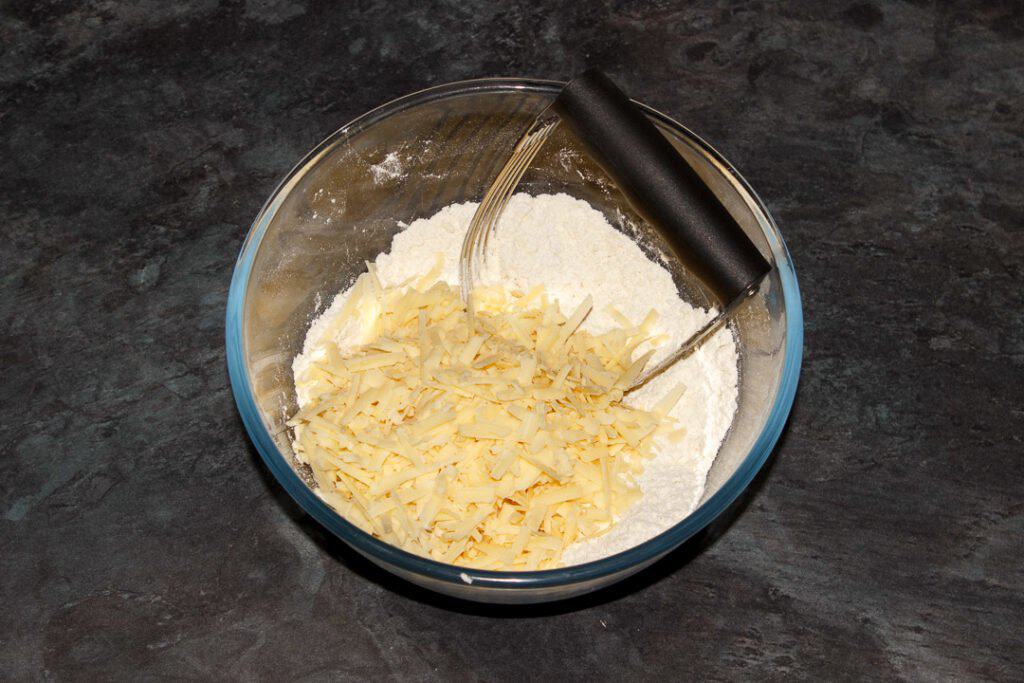
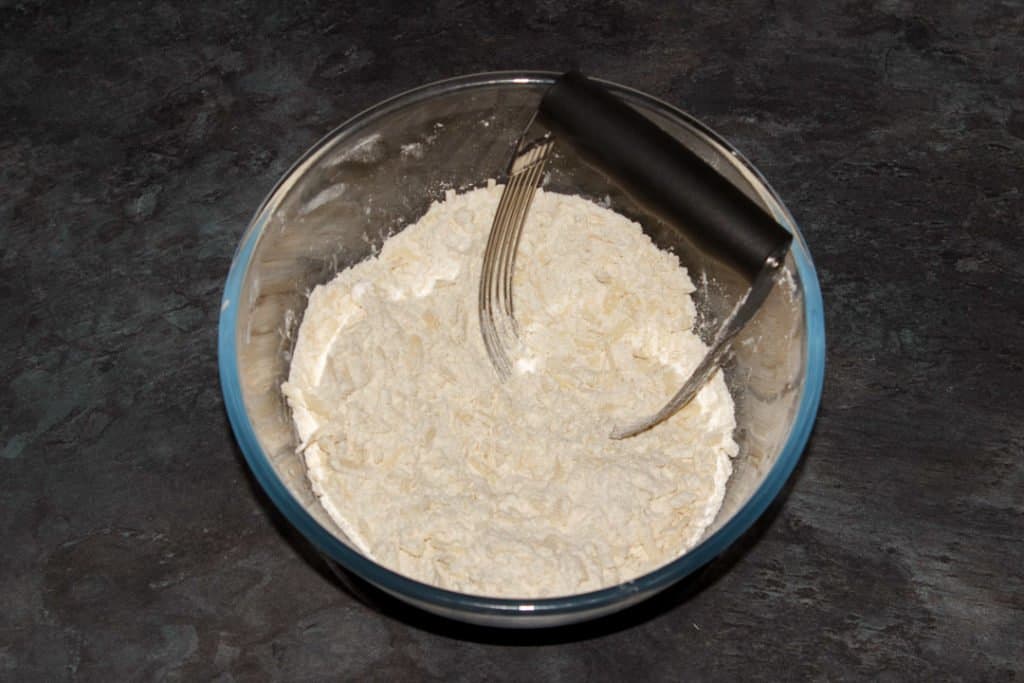
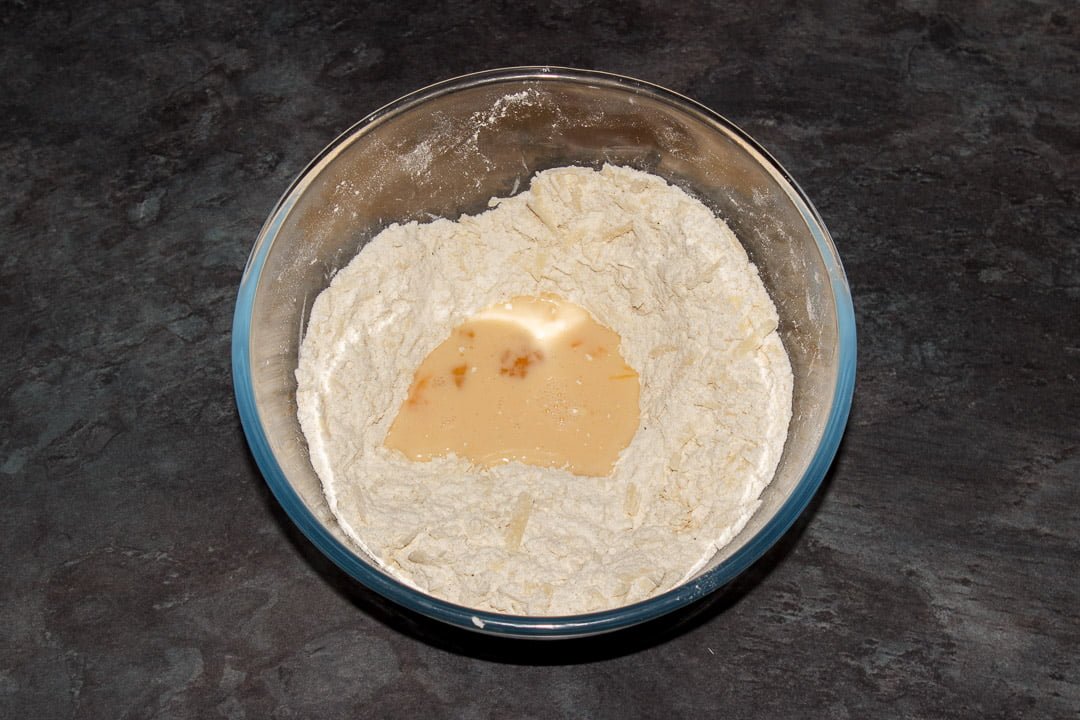
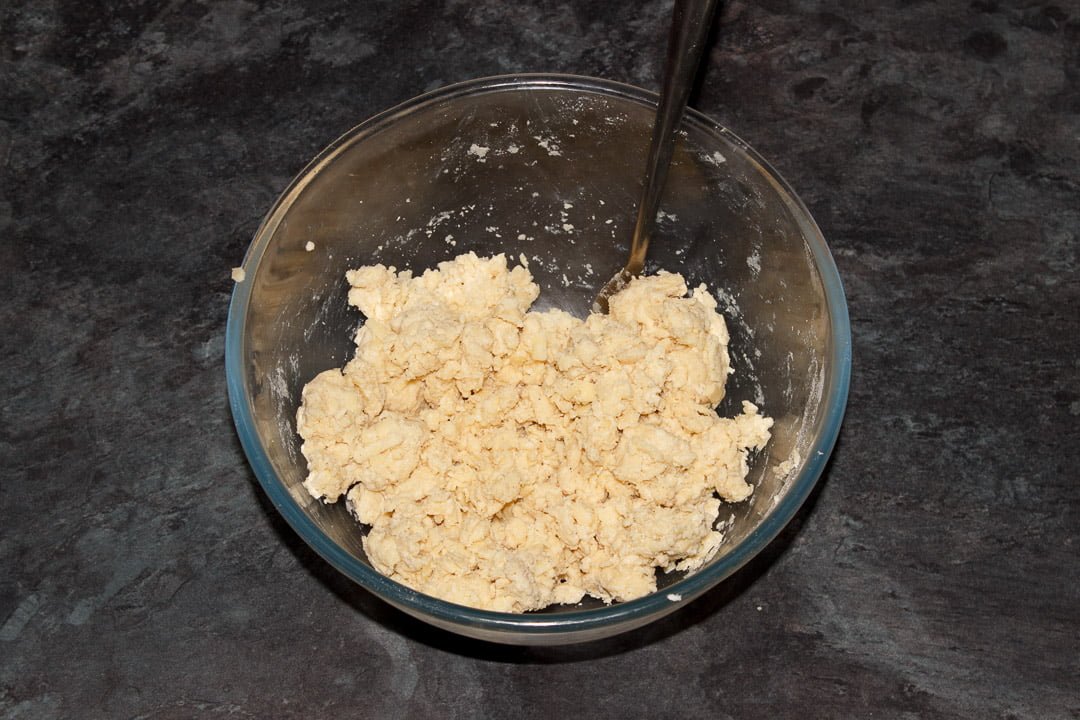
Then make a well in the centre and add the egg (x 1) and 2 tbsp of the milk. Mix with a fork to bring it all together.
You want a soft and pliable dough that's not sticky, so start with 2 tablespoon and add more, 1 tablespoon at a time, if you need to. Until the dough just comes together.


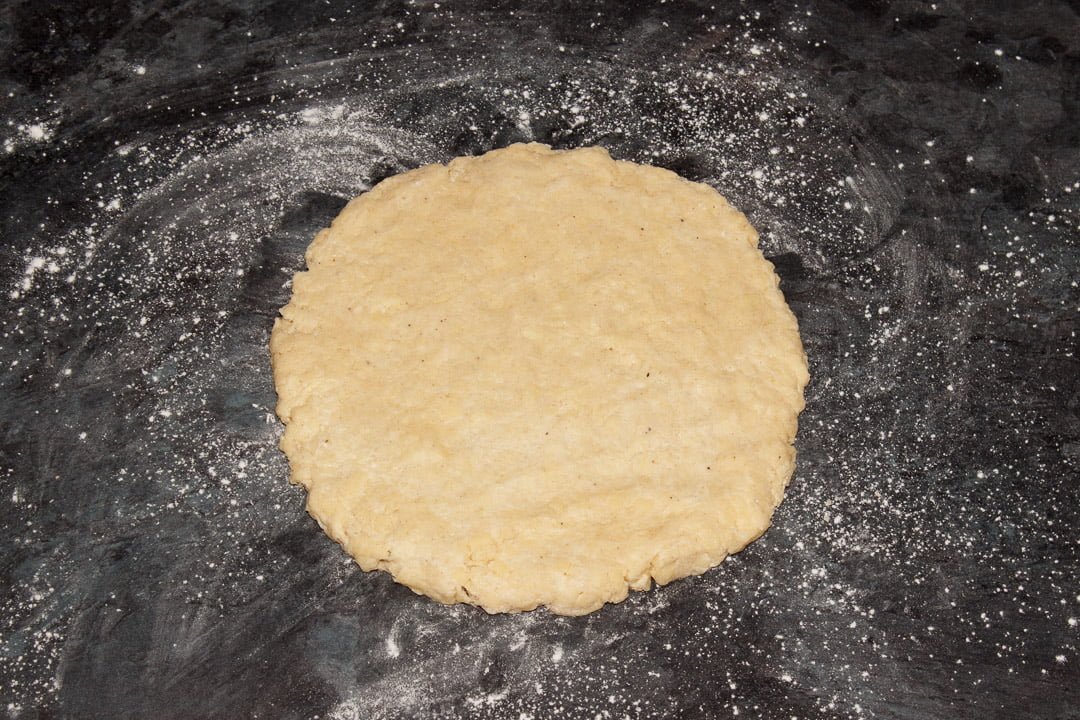
Next, tip the dough out onto a lightly floured work surface and bring it together gently to form a ball.
Try your best not to mess around with it too much - an overworked dough often results in chewy scones that don't rise very well.
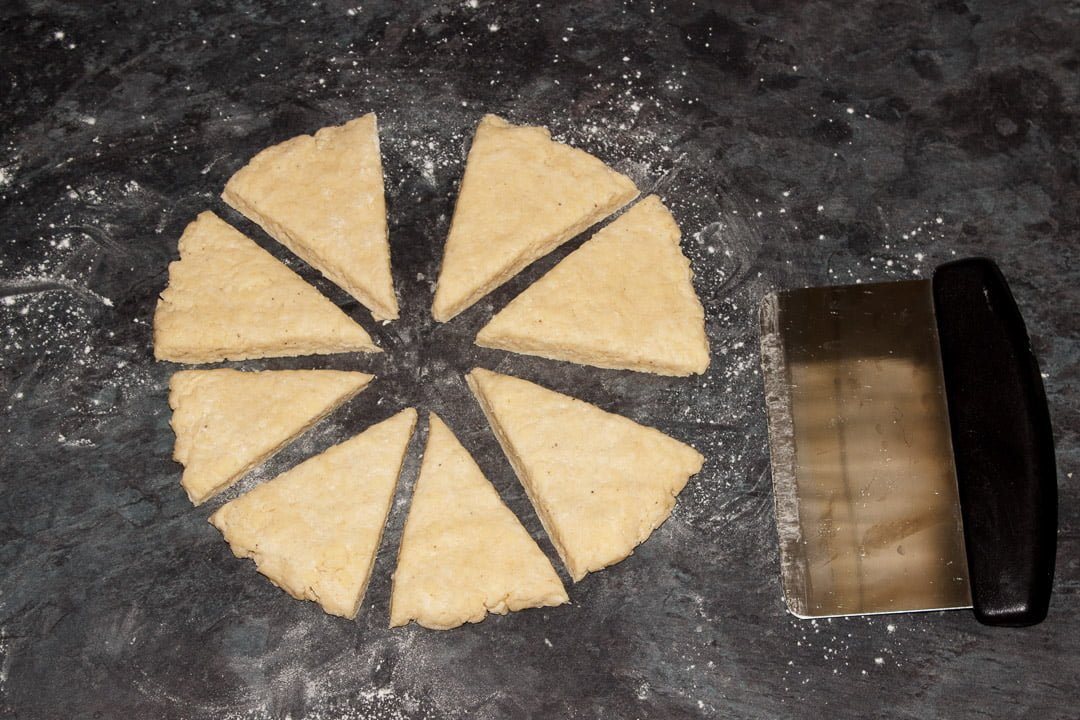
Gently press it out into a circle about 1" thick with your hands. (No need for a rolling pin.)

Then cut into 8 evenly sized triangles.

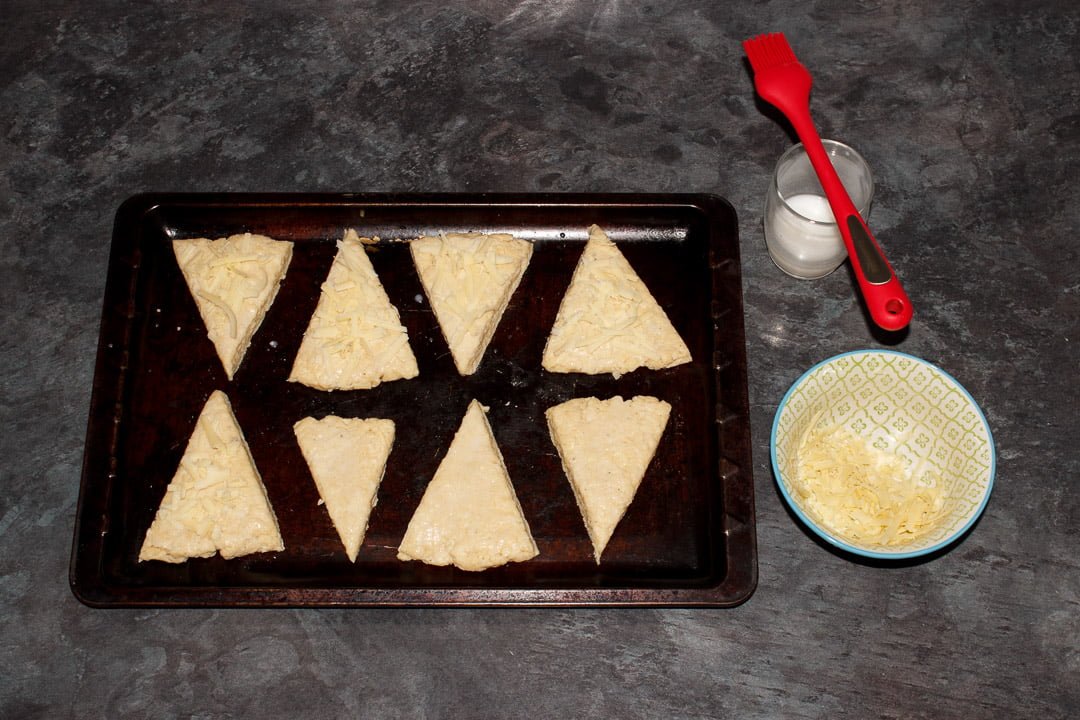
Next, evenly space your scones out on a baking tray. Brush the tops with a little milk and scatter with the remaining grated cheese (25g | 2/8 Cup).
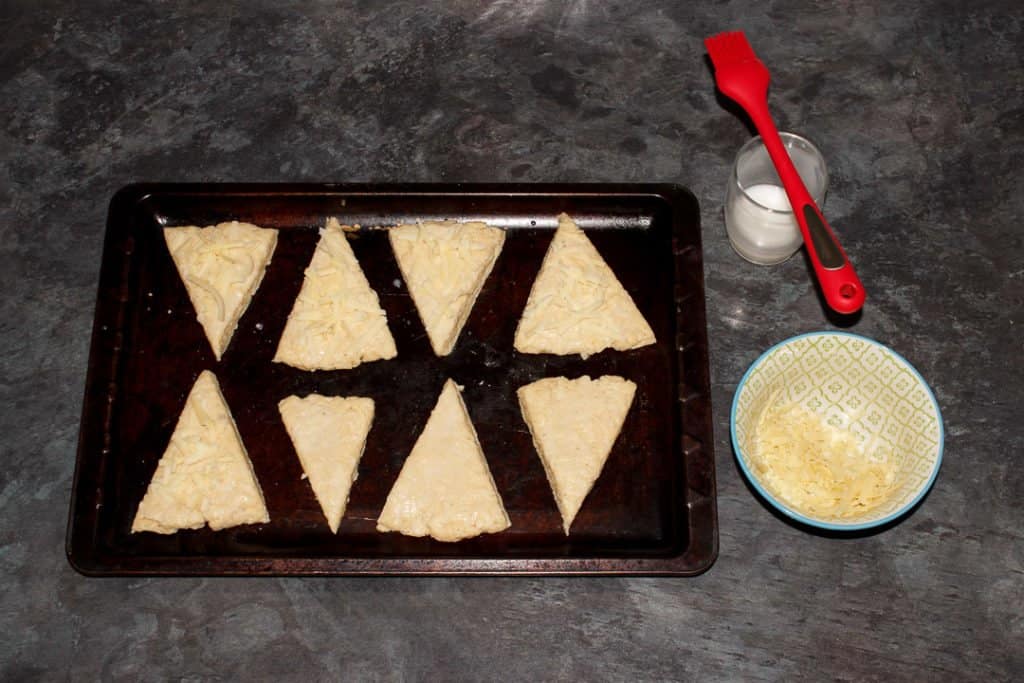
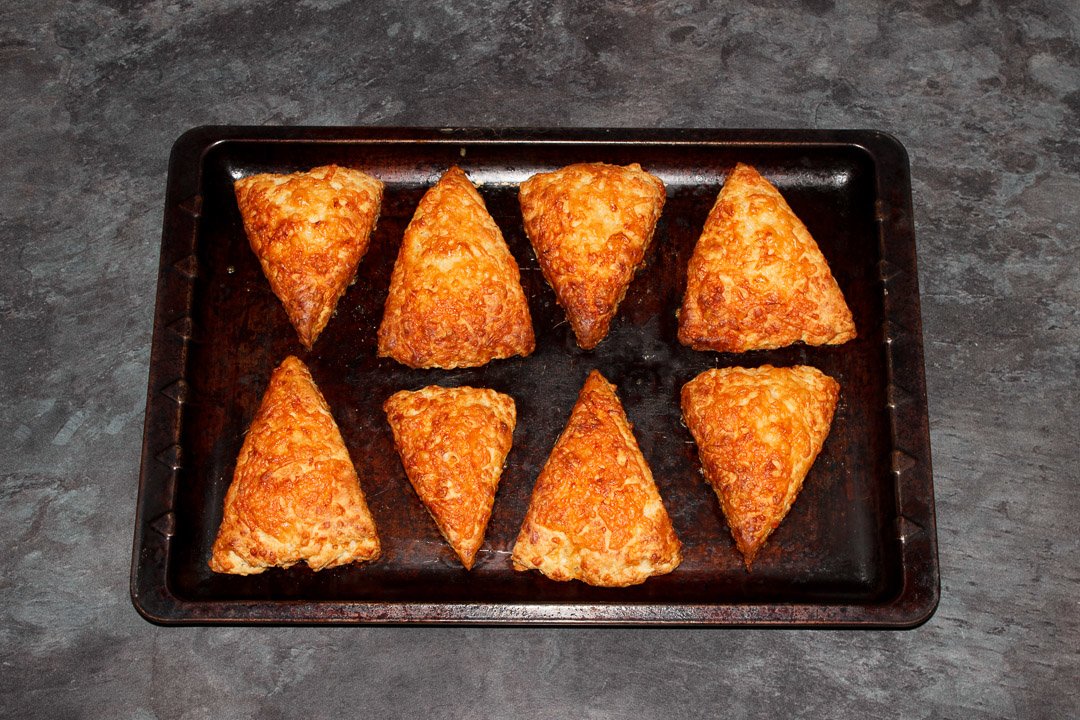
Finally, bake in the centre of the preheated oven for 10-15 mins, until a beautiful deep golden colour. Remember that every oven varies, so do keep an eye on your scones in the last 5 minutes of baking.
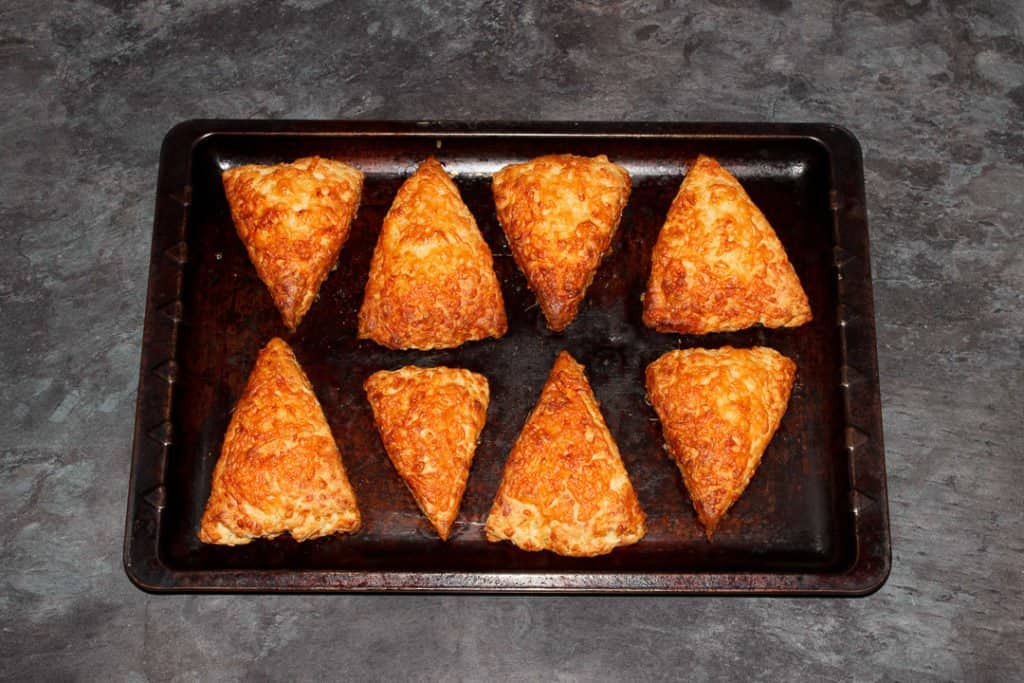
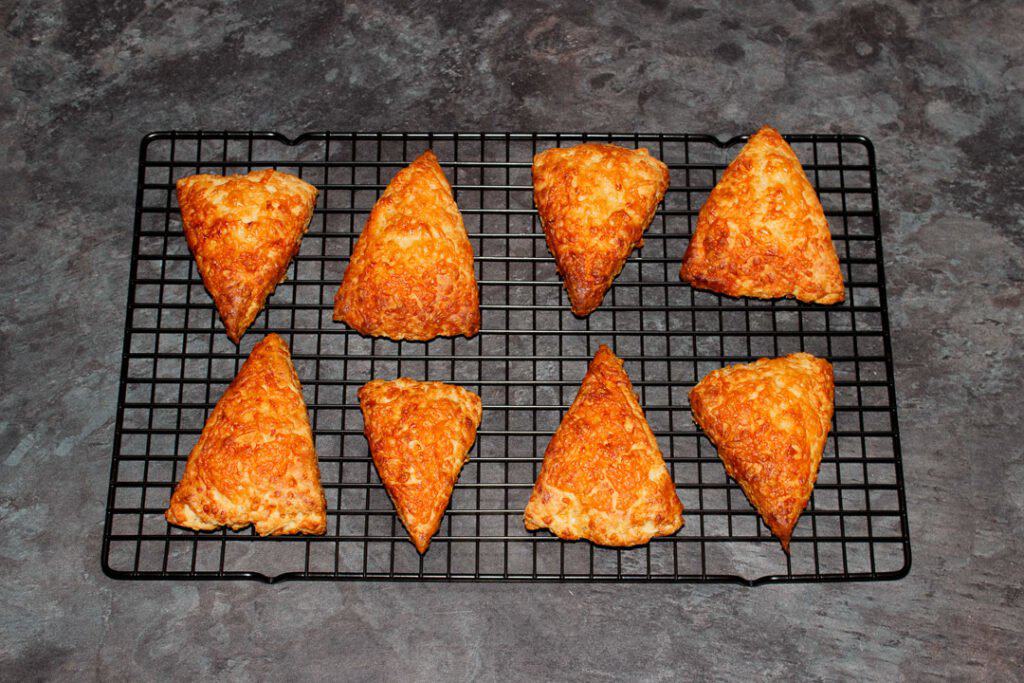
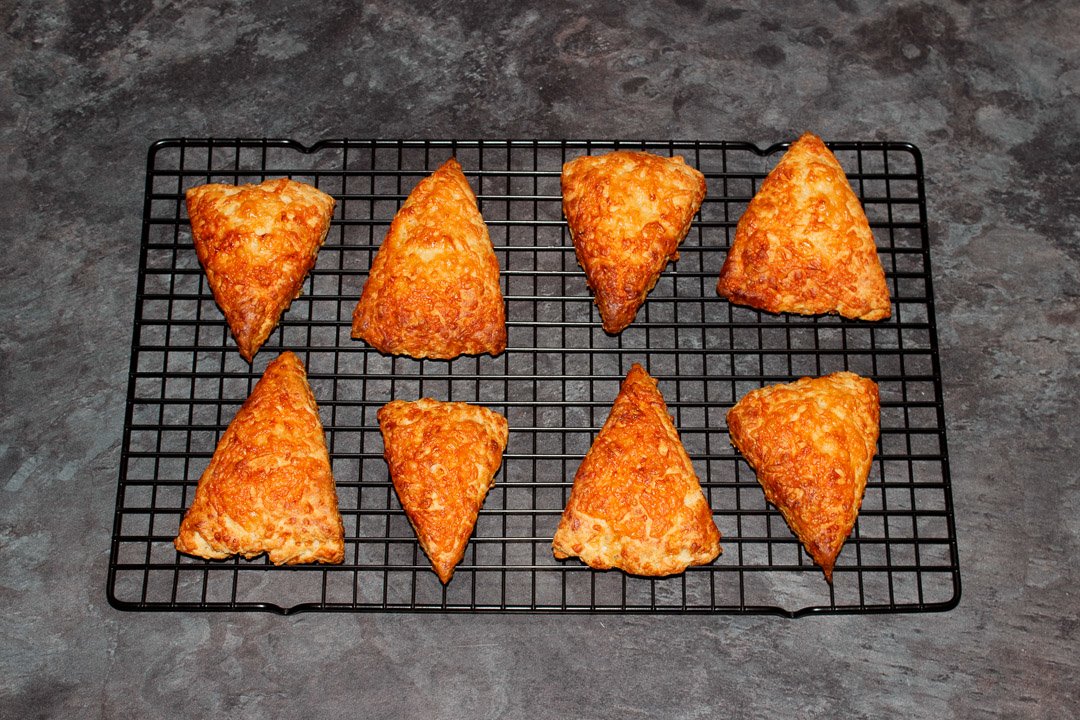
Allow to sit on the tray for a few minutes until cool enough to handle, then transfer to a wire rack to cool completely. (Although I highly recommend trying one with a good dollop of butter butter while they're still warm!)
How to store
Store your homemade cheese scones in an airtight container (I prefer metal) at room temperature, and consume within 3-4 days.
FAQs
In this recipe I use a combination of plain (all purpose) flour and baking powder. You can swap both of those for self raising flour if you prefer.
This could be for a number of reasons. Your oven temperature may have been incorrect, your baking powder (or self raising flour if you substituted) may not be in date or active anymore, or you could have dripped too much milk down the sides when you brushed the tops. All of these things can affect the rise.
Yes you can, but a strong cheese will always give the best overall flavour. You could use parmesan instead, but don't use a mild cheese. They just aren't strong enough for bakes, and the flavour won't carry through.
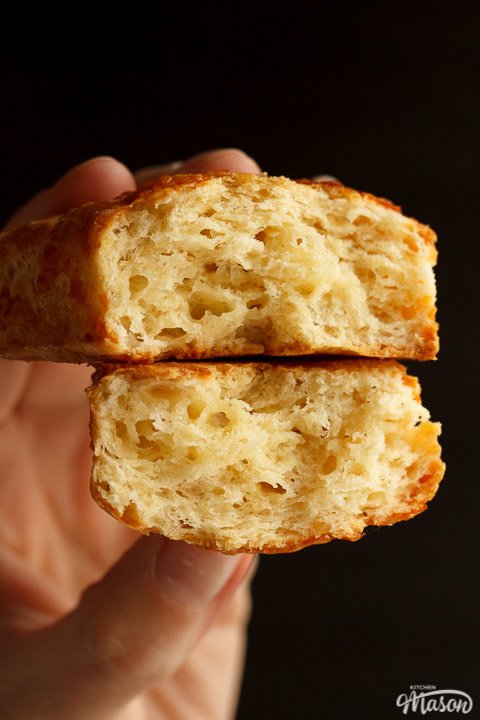
Scones require a light touch to achieve that desired light and flaky texture. Don't over work the dough, or your scones will become tough. The less you handle the dough the better.
Oh absolutely!! Chives and chopped crispy bacon are both excellent additions to cheese scones.
Loved it? Pin it! 💛

Easy Cheese Scones Recipe
Gran's cheese scones are golden, light, flaky, and exquisitely cheesy! They're utterly GORGEOUS fresh from the oven with a generous helping of butter.
Ingredients
- 170g (1 + ⅓ Cup) Plain Flour
- 3 teaspoon Baking Powder
- Salt and Pepper, to taste
- ½ teaspoon Mustard Powder
- 30g (⅛ Cup) Unsalted Butter, cold & cubed
- 125g (1 + ⅛ Cup) Grated Strong Cheddar Cheese, divided
- 1 x Medium Egg
- 2-4 tablespoon Milk
Essential equipment
- Large Mixing Bowl
- Pastry Blender (optional)
- Fork
- Baking Tray
- Pastry Brush
Instructions
- Preheat your oven to 220°C/Fan 210°C/428°F. In a large bowl, mix together the flour, baking powder, salt and pepper and mustard powder.

- Add the cubed butter and rub into the flour using either your forefingers and thumbs or a pastry blender. It should form very fine crumbs.
- Mix through 100g | ⅞ Cup of the grated cheese and reserve the rest for later.
- Make a well in the centre and add the egg and 2 tbsp of the milk. Mix the dough with a fork to bring it together. If it's too dry, add a little more milk, 1 tablespoon at a time. You want it soft and pliable, not sticky.
- Tip the dough out onto a floured surface and bring together to form a ball. Flatten out into a circle, about 1" thick, then cut 8 equally sized triangles.
- Space them apart on a baking tray. Then brush the tops with a little milk and sprinkle over the reserved grated cheese.
- Bake in the centre of the oven for 10-15 mins, until a deep golden colour.
- When cool enough to handle, transfer to a wire rack to cool completely.
Notes
If you would rather use a more in depth picture recipe, please see the main body of this post. Where you’ll also find lots of extra FAQs and helpful tips, should you need them.
Please note, this recipe includes both UK metric and US Cup measurements.
Storage
Store in a metal container at room temperature, and consume within 3-4 days.
Tips
- Don’t have plain flour and/or baking powder? Leave both of those out, and use self raising flour instead.
- Invest in a pastry blender. They’re cheap, work faster, and are less messy when rubbing ingredients together. Gran has one, and so do I!
- Use cold butter. Warm butter gets very messy very quickly.
- Using your hands to mix the dough? Run them under cold water first. Warm hands heat up the butter and it can melt quite quickly.
- Don’t overwork the dough! The less you touch it the better.
- Use strong cheddar cheese for the best flavour. You won’t taste a mild cheese.
- Try and cut all your scones to the same size, they will bake more evenly.
- Scones gone a bit stale? Warm them up in the oven and enjoy with some butter to bring them back to life.
Nutrition Information:
Yield: 8 Serving Size: 1Amount Per Serving: Calories: 153Total Fat: 7gSaturated Fat: 4gTrans Fat: 0gUnsaturated Fat: 2gCholesterol: 39mgSodium: 295mgCarbohydrates: 18gFiber: 1gSugar: 2gProtein: 4g
Nutritional information on kitchenmason.com should only be used as a general guideline, I am not a certified nutritionist. Please always check labels for allergens where applicable.
More recipes like this
- Apple crumble recipe - more of my Gran's wisdom
- The best homemade sweet chilli jam - a perfect combo with these cheese scones!
- Cheese Biscuits - more cheesy goodness.
- Spicy rosemary thins - another moreish savoury treat.
- You might also like these lemon blueberry scones.
Share your baking! 💛
Have you made my Gran's gorgeous cheese scones? I’d love to know if you have! Tag me in your pics on Instagram and Facebook. Or email me at emma@kitchenmason.com.

Emma is a British recipe writer, home cook, and founder of Kitchen Mason. For over 15 years, she has been creating simple, comforting recipes and practical kitchen tips that help tired, everyday people make dinner feel easier and more enjoyable again. Passionate about British home cooking, Emma shares reliable recipes, comforting classics, and realistic kitchen guidance designed for real life. Her work has also been featured in publications including Food Network, Cosmopolitan, and The Huffington Post.
Knowledgeable On: British home cooking, Easy dinner ideas, Comfort food recipes, Recipe writing



This is my favourite recipe for cheese scones. They are so good! Emma, if I wanted to make them with spring onion in, how would I need to change the ratio of ingredients?
Hi Tracy. I'm so happy you love my Gran's recipe! If I were adding some chopped spring onion in, I would actually keep the ingredients ratio the same. Hope this helps! Emma x
Looks great and tasty I like it, not many ingredients.
Hi Raymond, I’m so happy you like my recipe! Thank you so much for taking the time to share this with me 🙂 Emma x
Made these this morning. Cheese scones are my favourite scone. These are scrummy.
Hi Linda. That's great!! I'm so happy you enjoyed my recipe 🙂 Emma x
Anxiousrt to try these
They really are delicious, you’re gonna love them! Emma x